
Ibex Hunting during the British Period
Trophy Hunting is not new to Gilgit-Baltistan Region. In the last decades of the nineteenth century, big game hunting in the Kashmir region became very intense during the British age. After the extinction of Ibex and Markhor in the vale of Kashmir around the Pir Panjal range, trophy hunters went further northward, toward the Gilgit, Astore, and Baltistan regions to hunt for markhor and ibex. Hunters intensively shot ibex and markhor of all sizes. Makhors were hit badly in Gilgit and Baltistan as they dwell relatively low and were targeted easily and met the same fate as Kashmir animals. It is recorded that more than 30 animals were shot by a single hunter during a season.
Initial steps taken to Protect Animals
Overhunting in Gilgit-Baltistan and Kashmir take ibex and markhor near to extinction. An initial step was taken in 1913 by the Kashmir Game Preservation Department to ban hunting in Gilgit Baltistan valleys. There were no surveys or records to reflect the actual damage to the ibex and markhor populations because of overhunting but it was a good step to save animals.
Allowing trophy hunting in Gilgit-Baltistan
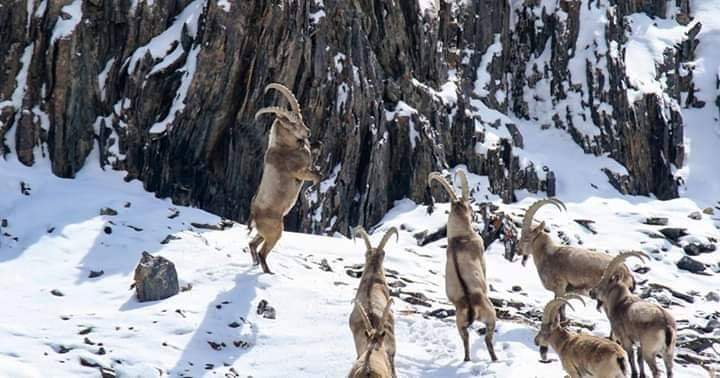
Ibex trophy hunting had been fully banned all over Pakistan almost three decades ago. It had mixed impacts, the initiative was good in terms of conserving ibex and markhor but impacted badly on local livelihoods and traditions. A complete hunting ban led to an increase in illegal hunting, locals hunt for angulates which have much significance for local communities.
In 1989 trophy hunting was completely banned, trophy hunting program was introduced once again by the Nagar region administration. A local political and religious leader, Syed Yahya Shah from Bar Valley or District Nagar of Gilgit-Baltistan found out the unfavorable effects of the ban on hunting, and he proposed a community-based trophy-hunting program for locals to combat the harmful effects of the ban. After discussing the proposal with the local Forest Officer, and AKRSP, he submitted the proposal to WWF-Pakistan and IUCN. They sent their representative Mr. Ashiq Ahmed Khan and a team of experts visited and analyze the program benefits for the local community. They study on ibex population in the area and found out that trophy-sized ibex were seen near local settlements very often. The trophy hunting program was approved by the team with some conditions such as that they agreed that an eligible trophy hunter must be a nine-year-old bull with a minimum horn length of 40 inches. Along with a big hunting game and recreational activity, 80% of the generated revenue from trophy hunting would be shared with the local community which could provide them a great source of income, this further incentivizing locals to protect their wildlife.

Initial Bar Valley community opens up commercial trophy hunting with government assistance for wildlife conservation in their area, the money has been used the money for safeguarding the animals from poaching and developing the community. Foreigner hunters were allowed to hunt a limited number of Himalayan ibex every season in specific areas only. Mr. Ashiq Ahmed Khan and his team’s initial report served as the key foundation for the 1st community-based trophy hunting program in the history of Pakistan in Gilgit-Baltistan. The program was supported by conservation organizations and studied as the most successful case of a trophy hunting program for its effective excellent ecological, economic, and social impacts on the ibex and the local communities.